Frequently asked questions
Can solar panels be installed above HVAC equipment?
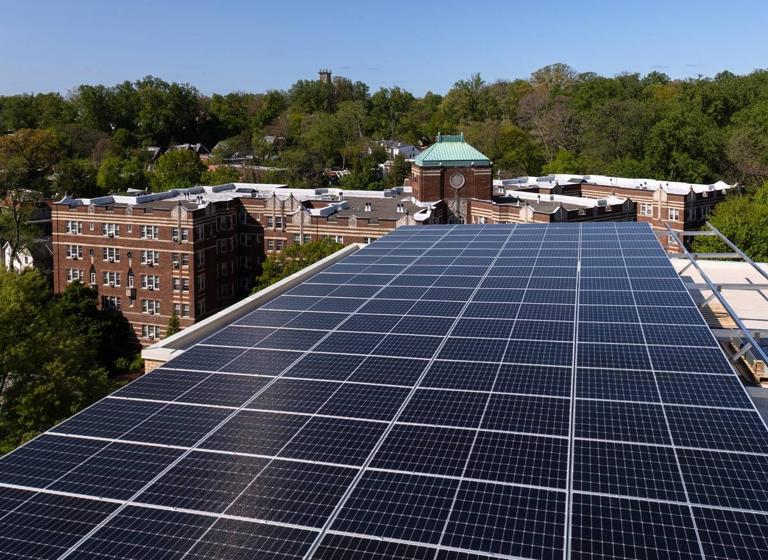
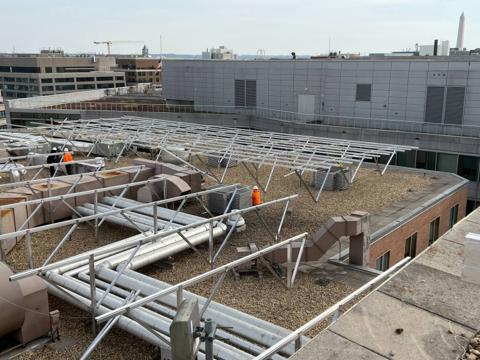
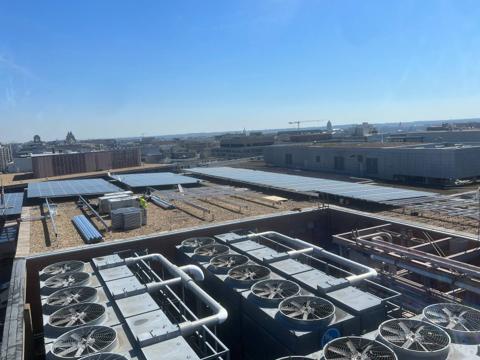
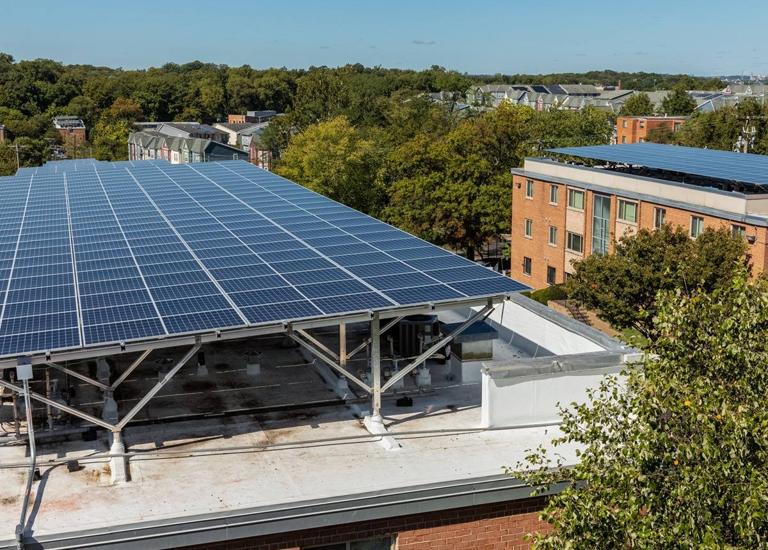
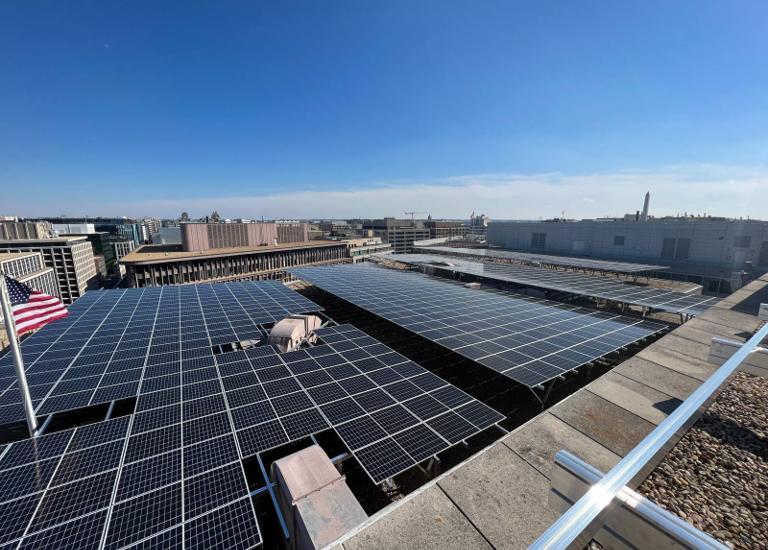
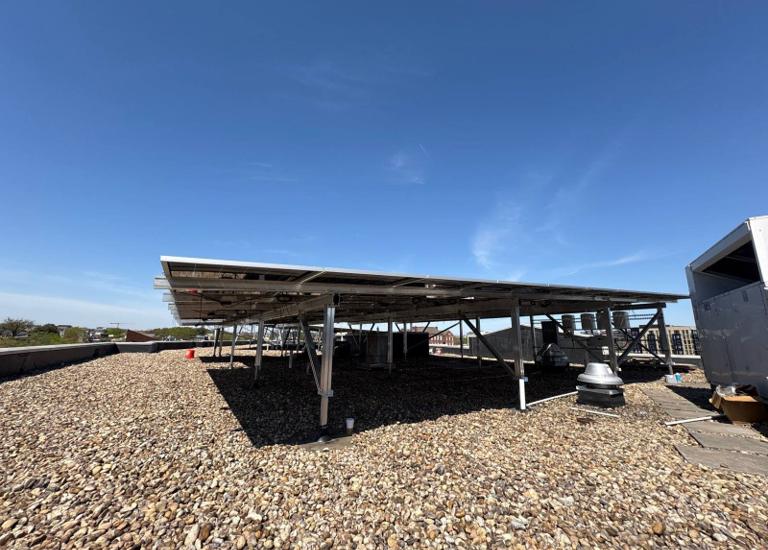
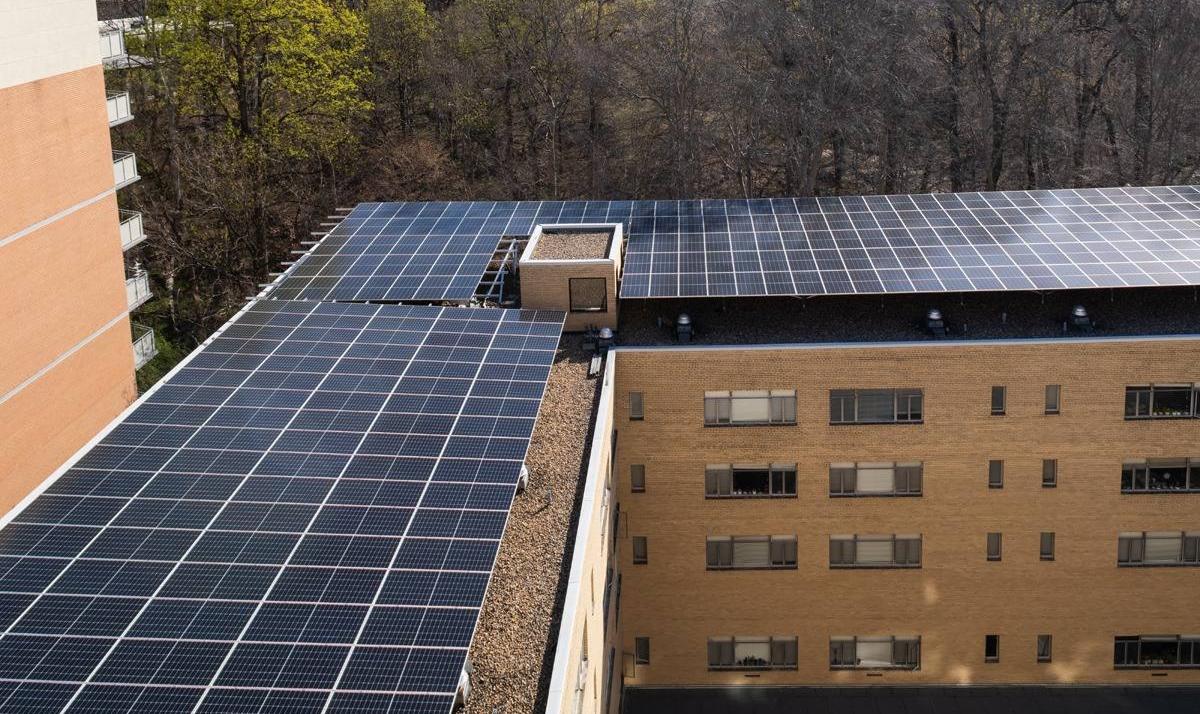
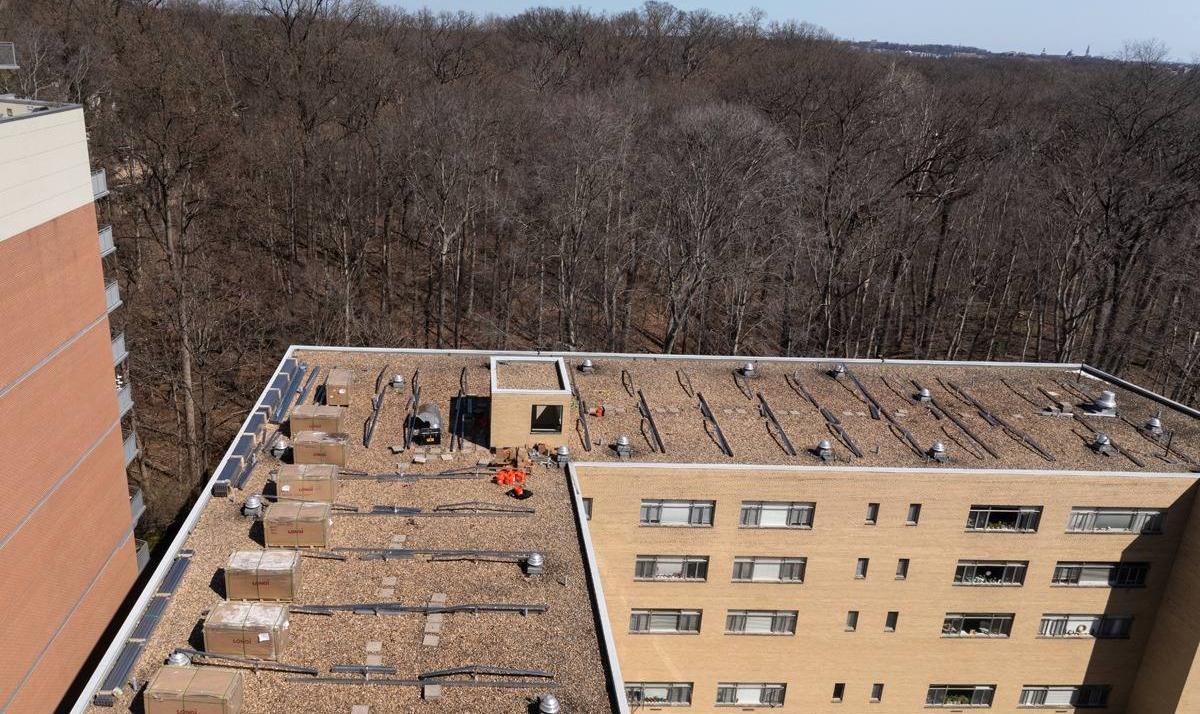
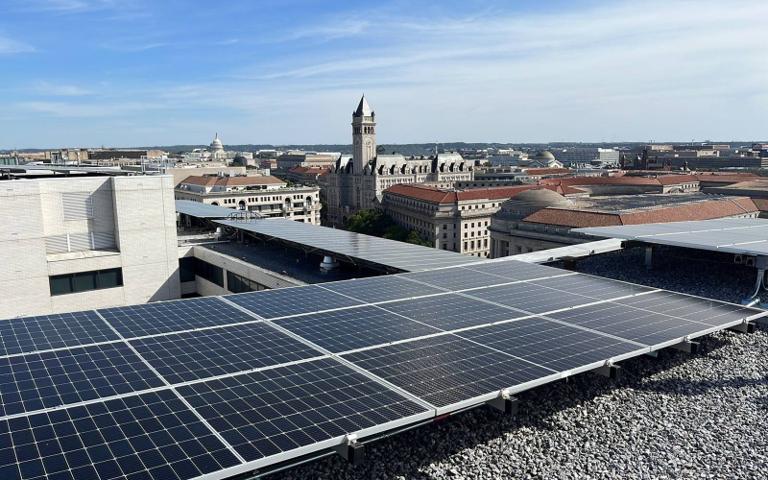
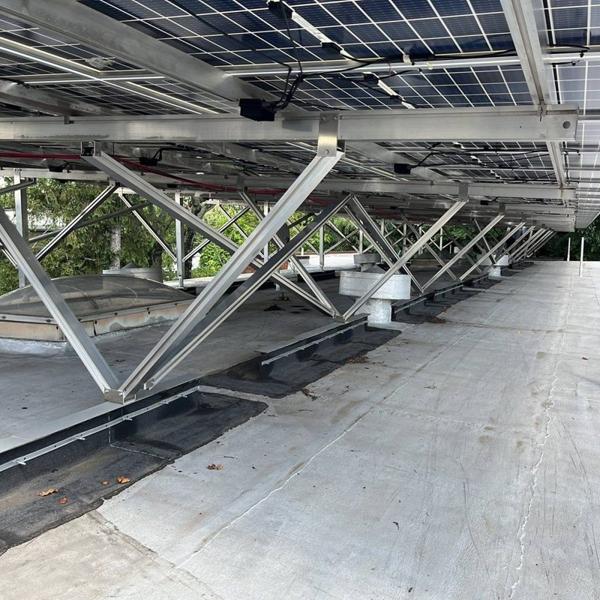
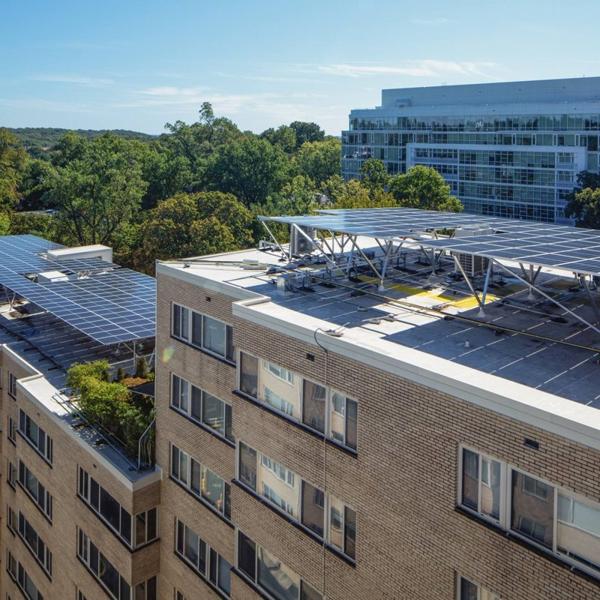
Yes. Elevated commercial solar racking systems can be engineered to position solar panels above existing HVAC units and other rooftop equipment, subject to structural, clearance, ventilation, safety, and maintenance requirements. This approach can increase usable installation area on crowded commercial rooftops. Read more about solar above HVAC equipment, see the Elevated Flush Mount System and the Burr project, or discuss your project.
Can a commercial roof be replaced without removing solar panels?
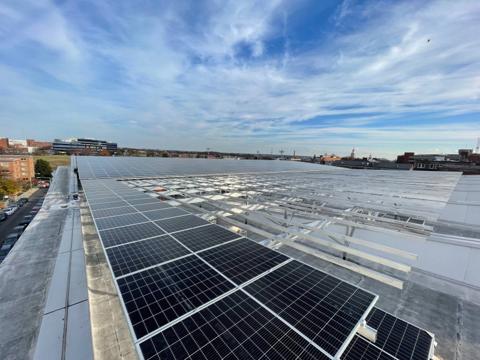
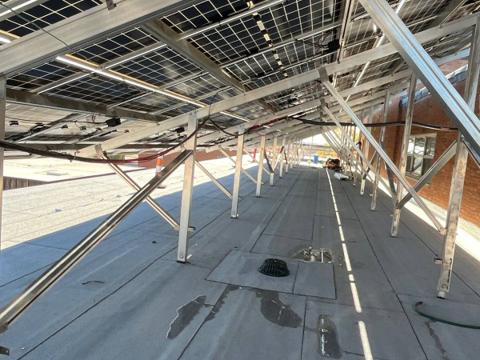
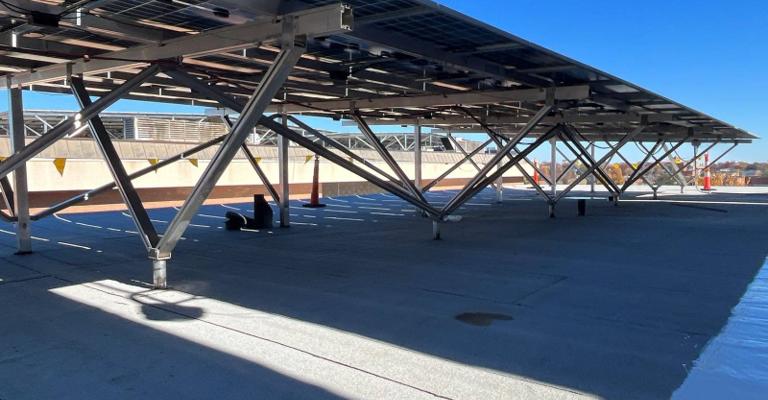
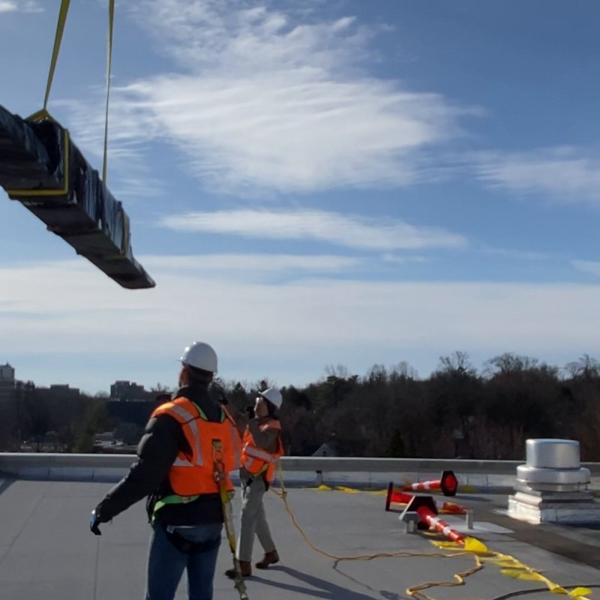
Some elevated solar canopy systems can accommodate roof replacement underneath an installed array when designed with appropriate clearance, access, and structural considerations. Universal Renewables' Locke Hall project provides a real-world example. Read more about roof replacement under solar canopies, see the Locke Hall project and the W System, or discuss your project.
What is the best solar racking system for a crowded commercial rooftop?
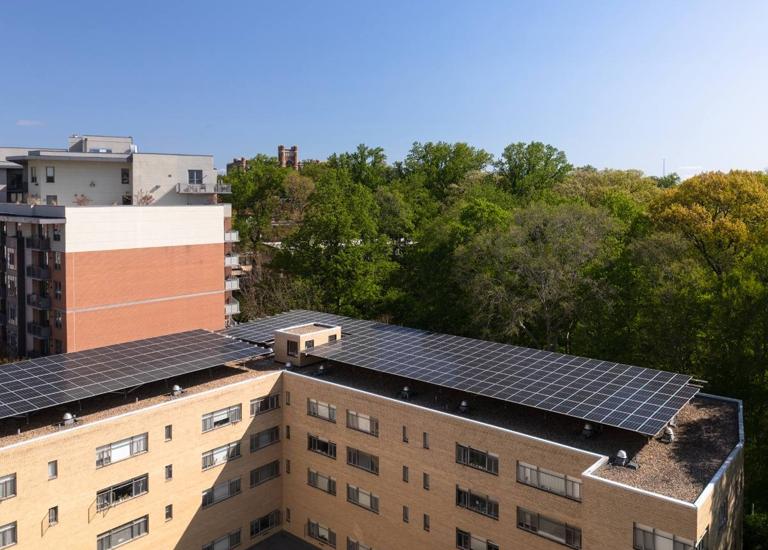
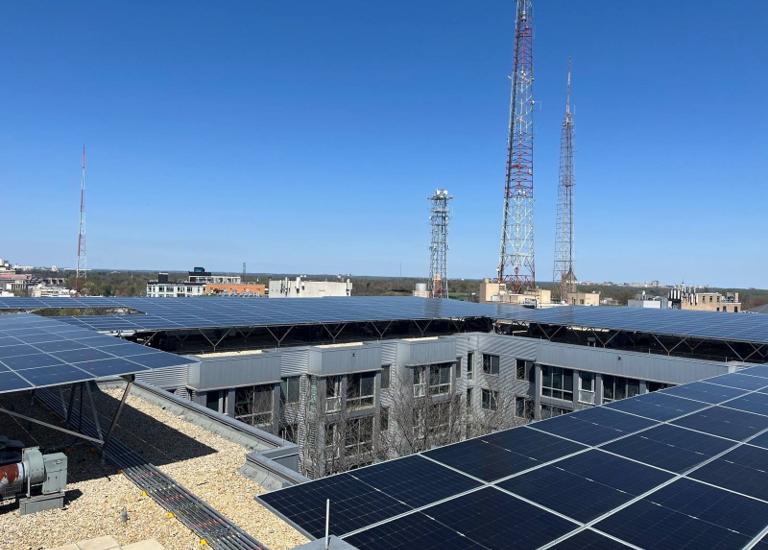
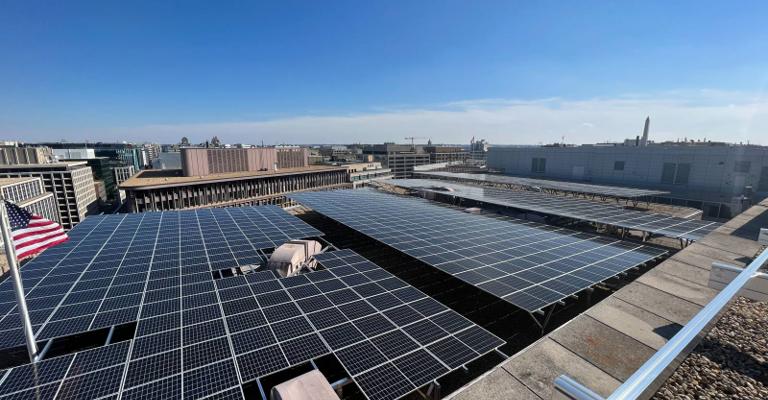
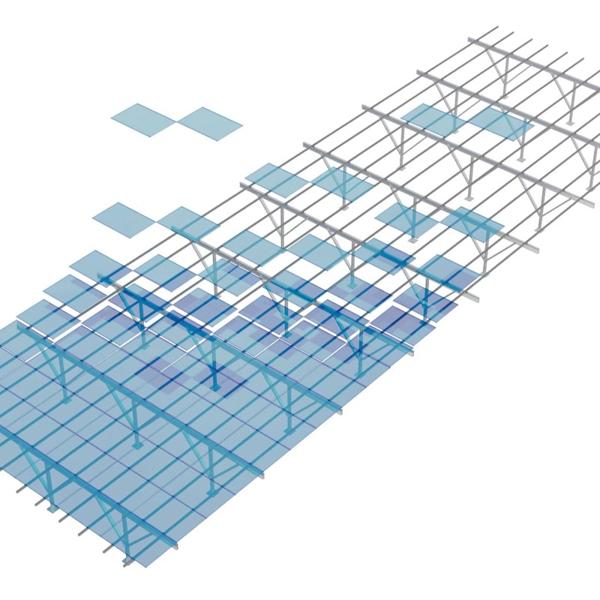
The appropriate racking system depends on rooftop obstructions, structural capacity, wind loads, height restrictions, maintenance access, and energy objectives. Elevated solutions such as Universal Renewables' W System and Elevated Flush Mount can provide additional flexibility for complex commercial rooftops. Compare the racking systems, see the W System on the 3801 Connecticut Ave. project, or discuss your project.
Does elevated solar increase commercial rooftop capacity?
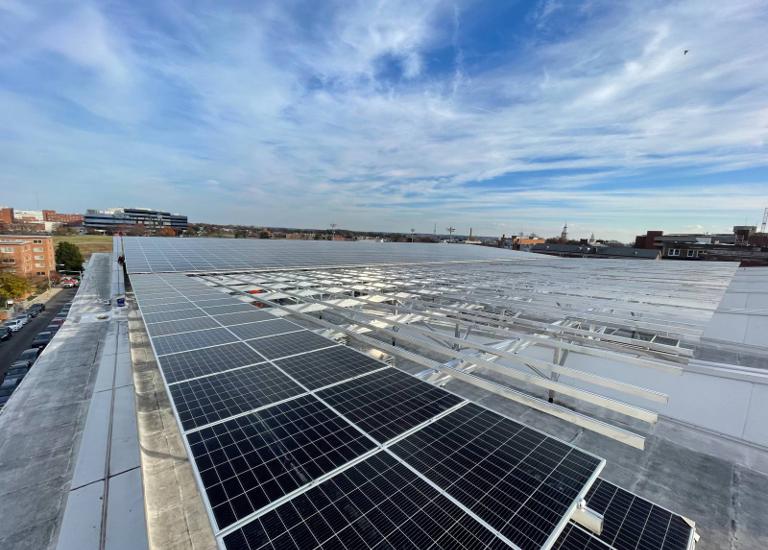
It can. By positioning solar panels above obstacles that would otherwise limit installation area, elevated systems may accommodate additional panels compared with certain conventional layouts. The actual capacity improvement requires project-specific engineering and layout analysis. Read about commercial rooftop solar and our engineering, see the Washington Square case study, or discuss your project.
Are elevated commercial solar systems made in the USA?
Universal Renewables offers American-made elevated solar racking through Universal Aluminum Products. The company reports 100% domestic content and 80% recycled industrial aluminum waste in its UAP products. Read about Made in USA solar racking, see the systems and the Cityline project, or discuss your project.
Which racking systems does Universal Renewables offer?
The W System (portrait, 3–7 ft on the low side, 1–15 degree tilt), the Elevated Flush Mount System (landscape, 3–7 ft, 1–3 degrees), the Flush Mount System (landscape, up to 1–2 ft, 1–3 degrees) and the High Tilt System (portrait, up to 20 ft, 15–70 degrees).
What makes Universal Renewables different from other racking system providers?
We don’t just manufacture racking systems—we design, engineer, and support complete solar solutions. With U.S.-made systems (via our sister company Universal Aluminum Products), proven performance, and in-house engineering expertise, we help EPCs deliver projects on time, on budget, and fully code-compliant.
Can your racking systems handle highly obstructed rooftops?
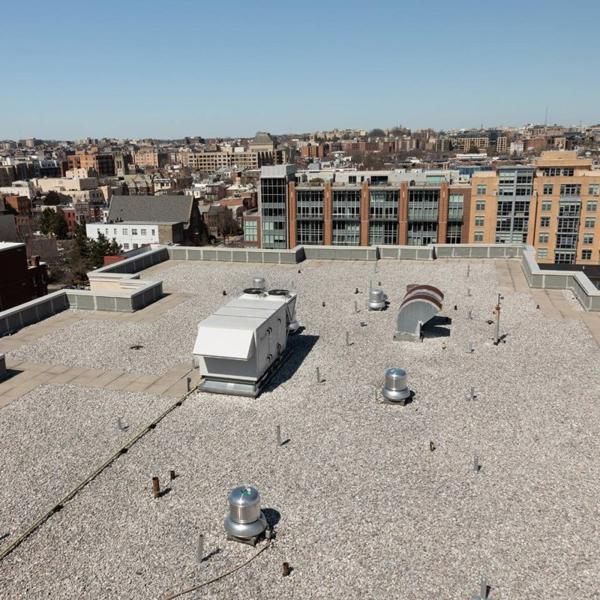
Yes. Our solutions are specifically designed to maximize usable rooftop space—even on crowded, mid-rise or high-rise urban buildings with HVAC units, vents, or other obstacles.
How do your systems perform on older roofs or roofs due for replacement?
Our solutions are engineered to protect roofing integrity with flashing in line with manufacturer requirements, preserving roof warranties where applicable. We also offer systems that allow for roof replacement without dismantling the solar array, reducing downtime and costs.
Are your racking systems compliant with local codes and engineering standards?
Absolutely. Our internal engineering team provides location-specific stamped drawings, ensuring compliance with local building codes, wind loading, and structural requirements. Every project comes with guaranteed system integrity and performance.
How quickly can you deliver materials and support installation?
Because our systems are Made in the USA, we eliminate long wait times and tariff-related delays. Our streamlined logistics mean faster deployment, predictable delivery, and reduced risk of project overruns.
More answers about elevated solar racking